


Why Choose Honest ACIC Cables
☑ Maintains data and control signal integrity
☑ Armor guarantees heavy-duty mechanical protection
☑ Strict quality testing according to the CSA C22.2 standards
☑ Easy installation without the need for conduits
☑ Exceptional resistance to moisture and vibration
What is ACIC Cable?
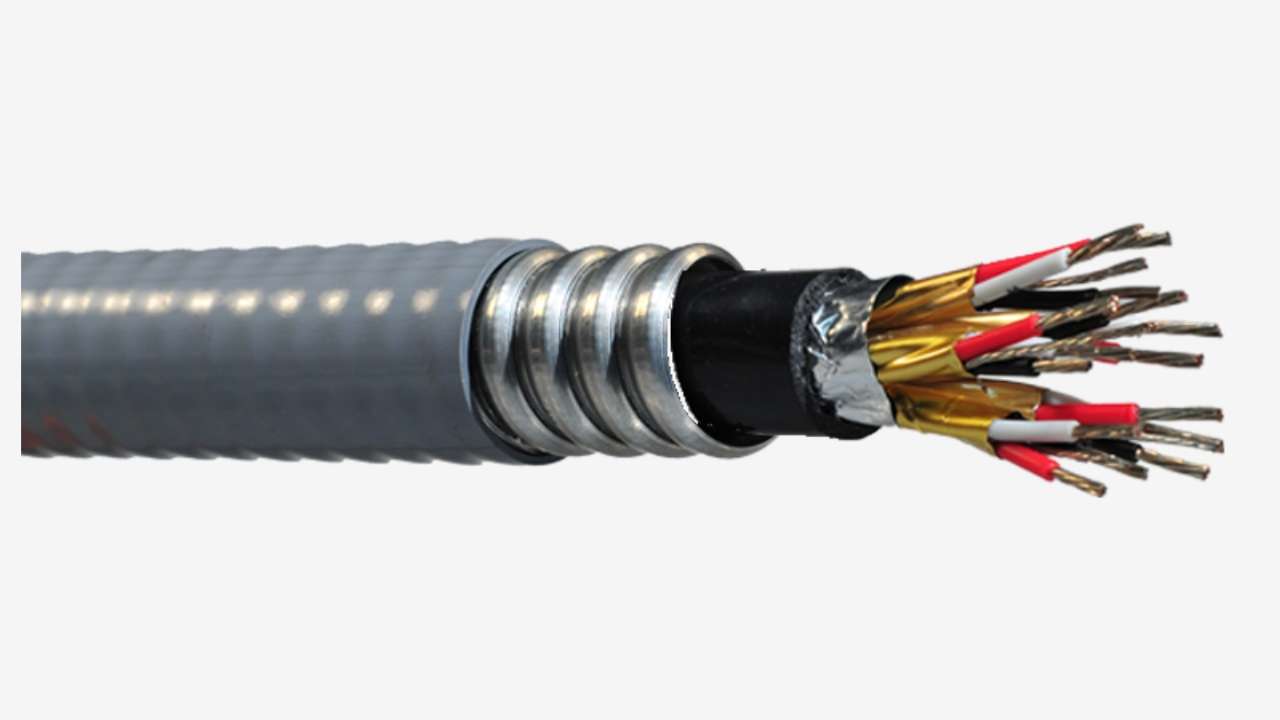
Armoured control and instrumentation cables (ACIC) are specially engineered to transmit data and control signals in industrial environments. Our cables feature aluminum interlocked armour for enhanced protection and robust mechanical strength.
At Honest Cable, we customize ACIC cables with different conductor sizes, insulation and jacket material to match the dynamic needs of every project. Whether your project requires underground or cable tray installations, Honest Cable is your trusted cable factory in China.
Our Cable Product Category
Unlike the standard instrumentation and control cables, Honest ACIC cables feature unique armor for robust mechanical protection. At Honest, we offer a wide range of ACIC cables:

Working temperature ranges from -40 to 105°C for dry conditions and from -40 to 75°C for wet conditions.

Working temperature ranges from -40 to 105°C for dry conditions and from -40 to 75°C for wet conditions.

Honest specialized high-voltage heavy-duty cables are designed for specialized requirements.

Copper remains the industry standard, with our Aluminum options also available for specific applications.
Our ACIC Cable Structure
Honest ACIC cables can withstand harsh industrial environments due to their unique cable structure:
- Conductor: Soft-annealed stranded copper according to ASTM B3
- Insulation material: Cross-linked polyethylene (XLPE)
- Cable shielding: An option for individual or overall shielding with aluminum or polyester foil having tinned copper drain wire
- Inner jacket: Polyvinyl chloride (PVC)
- Armour: Interlocked aluminum
- Outer jacket: PVC with HL, or FT4 marking

Key Applications
For over 20 years, Honest data and control signal cables have been serving many industries in the U.S.A, Europe, and Asia. Even with the changing data transmission requirements, our cables guarantee a high signal-to-noise ratio.

These cables connect sensors, PLCs, and DCS systems for seamless data transmission, ensuring optimal production.

From satellite communication and edge computing to wireless networks, our cables guarantee seamless data transmission without interference.

The shielding offers superior moisture and vibration protection without compromising on data or control signal transmission.

The rugged ACIC cable is designed to protect data from external interference when deep in the oil rigs or coal mines. They can withstand abrasion, vibration, and physical crushing.
TECK 90 is an armored cable with a steel interlocked armor with a PVC jacket designed for wet or dry outdoor/indoor applications. It is mostly used for power and control signal transmission.
On the other hand, ACIC cables mostly have aluminum interlocked armor, known for their high-fidelity and special design for control/instrumentation signal transmission.
Yes.
Our cables are approved by CSA for direct burial. Therefore, you don’t need conduits for the installation. However, you can install these cables on cable trays.
Yes, Honest ACIC cables can be installed in Class I, Division 1 or 2 areas. Our cable structure cannot allow gases to penetrate through its surface.
Features of ACIC Cable

High Mechanical Protection
The biggest difference between an ACIC cable and a control cable is that the ACIC cable has an additional layer of armor, steel tape (STA) or steel wire (SWA) on the outside of the cable. This layer can help you block out most of the physical damage when cables are buried underground or when they are touched and pulled by equipment in the factory.
This is critical if your project involves direct burial, outdoor installation, or a harsh construction environment. ACIC cable is more reliable and safe in these situations.
Excellent EMI Shielding Performance
If your cable is used to transmit control signals or meter data, stability is more important than anything else. ACIC cable has a shielded layer (shielded instrumentation cable), which reduces external electromagnetic interference and keeps the signal stable.
Wide Environmental Resistance
ACIC cable has an advantage in harsh environments because its sheath material can be selected according to the environment, such as standard PVC, more environmentally resistant PE, or low-smoke, halogen-free (LSZH) options. If your project is in the oil and gas industry, chemical plant, or long-term outdoor operation, it is more appropriate to choose this type of cable, as it virtually eliminates problems such as jacket cracking, aging, or performance degradation.
Flexible Installation Options

In some projects, you may not be able to fully protect the cable, such as laying pipes or adding additional protective layers. One advantage of the ACIC cable is that it is flexible in installation. It can be buried directly in the ground, used by a bridge, or a pipe.
Because it already has an armored structure, you don’t need to add much additional protection. This can reduce construction complexity in many projects while saving some installation costs. While the cable itself will be a bit more expensive, the overall cost may not necessarily be higher.
Long Service Life & Reliability
ACIC cable is designed for long-term operation, and it performs better in terms of resistance to aging, environmental changes, and stability. It can make your equipment run more stably, with less downtime and frequent cable changes. This is important if your project will incur significant losses if it goes down.
ACIC Cable vs Other Cable Types
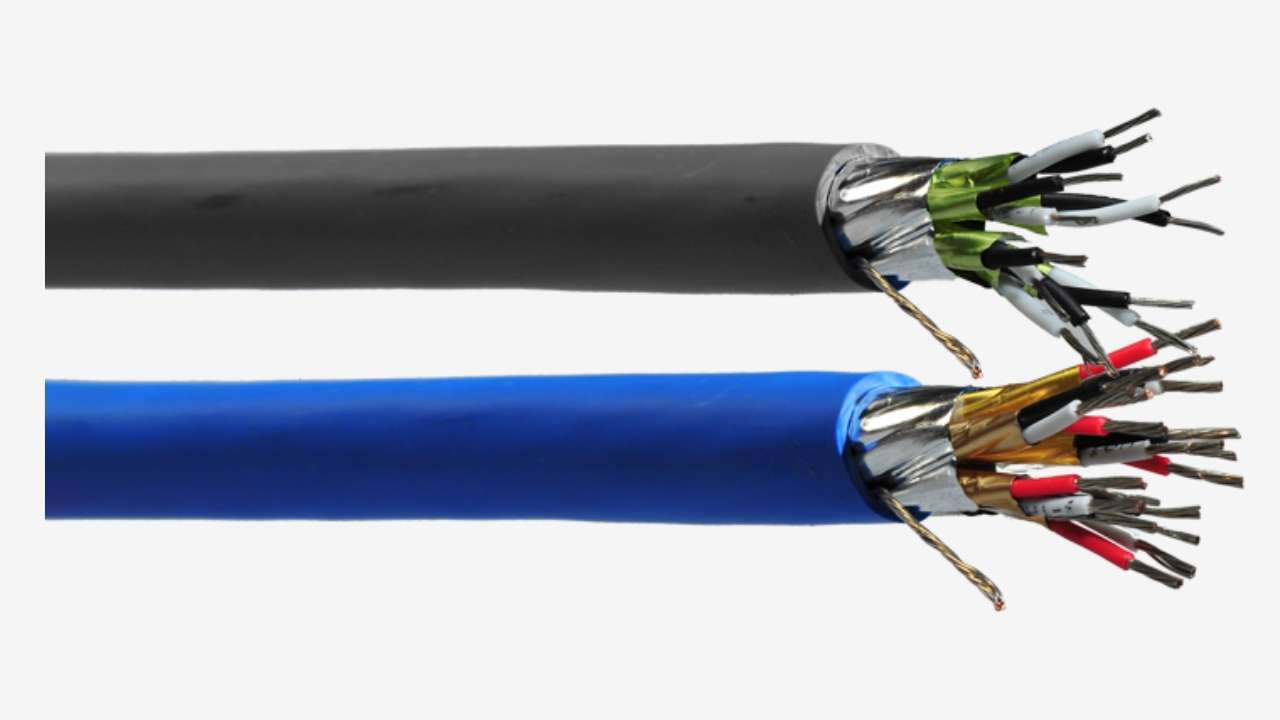
ACIC Cable vs Control Cable
If your cable is only used inside the device, or connected between control cabinets, the environment is clean, no one steps on it, no car pressure, then you can use an ordinary control cable.
But if the cable is to go out of the device, such as laying it on the ground, walking on site, or might be crushed or pulled, then you have to consider ACIC cable.
ACIC Cable vs Power Cable
Many people will struggle to choose between ACIC or power cable, but you really just have to look at what you are doing.
If you are powering a device, such as a motor or power system, use a power cable.
If you are doing control, transmitting signals, or connecting a PLC or a meter, then choose ACIC cable.
ACIC Cable vs SWA Cable
When you see the SWA cable, do not worry too much about it because it is more or less referring to a structure. This can be seen from the point that if you choose the ACIC cable, then all that you are deciding on is whether to choose the SWA structure.
In case your cable has to bear tension for whatever reason, such as being pulled, fed into a well, or even dragged along, then SWA structure should take precedence; otherwise, there would be no need to select it.
ACIC Cable vs Unarmored Instrumentation Cable
The selection of these two cables can be viewed as a “money-saving or safer” choice. Provided that the cable is routed safely, for example, on the bridge, or even in the equipment itself, and there are no concerns about the external force affecting the cable, the use of unarmored instrumentation cables can save money.
However, when there is even the smallest doubt, due to numerous people passing by and numerous devices in the area, the unarmored cable is no longer dependable, and we have to select the ACIC cable anyway.
ACIC Cable vs AAC / AAAC / ACSR
If you see products like AAC, AAAC, ACSR, you can skip them directly; they are not the types you are looking for now. These are used on high-voltage transmission lines, such as bare wires on utility poles, and are not used by factories, equipment, or control systems.
If your project is in a factory, equipment system, or automation control, then you need cables with complete structures such as ACIC.
How to Choose the Right ACIC Cable

Define Your Working Environment
Where are you installing the cables? In what kind of industry? In manufacturing, power generation, construction, or some other field? Indoor, outdoor, or direct burial?
This will define everything for you. If you do not understand at this point, you will pick the wrong one.
Choose the Right Armor Type
After you have selected the ACIC cable, the next phase is to select the armor type. Examples include SWA and STA, which are made differently and can tolerate various amounts of external stress.
If your cable has tensile strength, SWA is recommended. But if your cable needs to tolerate external stress, for example, burial, then STA will do just fine.
Select Shielding Requirements
Shielding is not required for all projects, but once signal stabilization is needed, it cannot be ignored. If you have a work environment with a lot of equipment, a complex electromagnetic environment, or the system has requirements for signal accuracy, then you should choose an ACIC cable with shielding. Otherwise, in the case of a simpler environment, you may also think about not using shielding to save cost.
Also, if the signal requirements are high, you need to pay attention to the type of shielding structure that is necessary.
Determine Cable Specifications
Here, the purpose is to define certain parameters like voltage levels, cores, wire types, and temperatures.
The number of cores depends on the number of control points you have; don’t choose too many, and don’t use too few. The voltage level to match the system requirements is usually 300V or 600V. The conductors can be solid or twisted, mainly depending on the installation method and the flexibility you need.
Check Compliance & Standards
There are some projects where there are high specifications for ACIC cable standards, such as CSA (Type CIC), UL, or IEC. If you are making an export project or supplying a large project, you must check whether these particular standards are met. Don’t wait until you place your order to find out it doesn’t meet the standards, as that can cause a lot of trouble.
Work with a Reliable Supplier
Confirm whether the supplier can make customization, provide advice according to your project, and whether the delivery date is stable. ACIC cable is often not a standard stock product, but is produced based on demand.
As a professional ACIC cable supplier, Honest Cable can assist you in the selection process and help you reduce errors.